Hygiene management in remote work

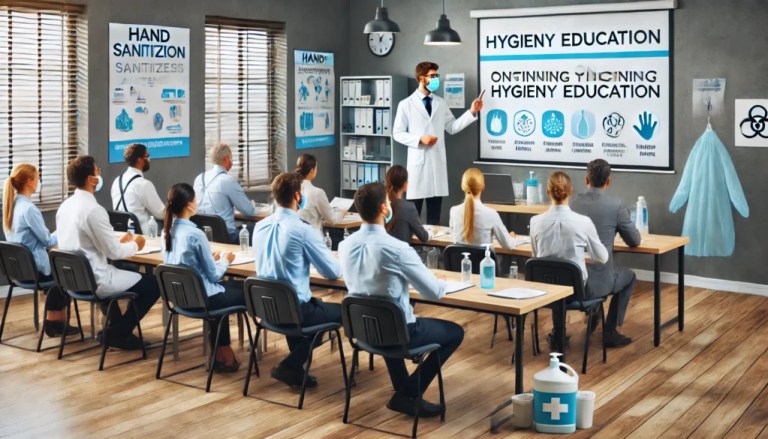
Salle de conférence dans une usine de salubrité avec des affiches sur le nettoyage et les désinfectants. Des employés qui écoute le patron expliquer comme avoir une bonne gestion de l'hygiène en télétravail.

Remote work has become a major component of the modern professional world. While working from home offers numerous advantages, it also presents challenges in terms of hygiene and health. A clean and organized remote work environment is essential for maintaining well-being and productivity. This article provides tips for effectively doing disinfection and managing hygiene while working remotely.

Why is Hygiene in Remote Work Important?

  1. Physical Health: Reducing the risks of allergies, illnesses, and musculoskeletal disorders.
  2. Mental Health: A clean space helps reduce stress and improve concentration.
  3. Productivity: An organized environment facilitates efficient work.

Tips for Maintaining a Healthy Work Environment at Home

  1. Set Up a Dedicated Workspace:
    • Separate Spaces: Choose a specific place to work, distinct from rest areas.
    • Ergonomic Equipment: Invest in a comfortable chair, a desk at the right height, and a screen at the appropriate distance.
    • Organization: Use storage solutions to avoid clutter.
  2. Clean Regularly:
    • Work Surface: Wipe the desk daily with a damp cloth.
    • Computer Equipment: Clean the keyboard, mouse, and screen to remove dust and germs.
    • Floor: Vacuum or sweep to prevent dirt accumulation.
  3. Ventilate the Space:
    • Natural Ventilation: Open windows several times a day to renew the air.
    • Indoor Plants: Use plants to improve air quality.
  4. Personal Hygiene:
    • Morning Routine: Prepare as if going to the office, including washing and dressing.
    • Hand Washing: Regularly wash hands, especially before eating.
  5. Waste Management:
    • Nearby Trash Can: Keep a small trash can near the workstation.
    • Waste Sorting: Recycle paper and other recyclable materials.
  6. Limit Food Consumption at the Workstation:
    • Avoid Meals at the Computer: Prefer eating in the kitchen or dining room.
    • Clean Up After Snacks: Remove crumbs and packaging to avoid pests.
  7. Maintain Good Posture:
    • Regular Exercise: Take breaks to stretch and move around.
    • Ergonomic Position: Adjust the chair and screen to avoid strain.
  8. Time Management and Work-Life Balance:
    • Fixed Hours: Set regular working hours.
    • Disconnecting: Know when to stop working to rest and recharge.
    • Relaxation Activities: Incorporate moments for leisure and relaxation.
  9. Disinfection:
    • Disinfect Surfaces: Regularly disinfect the desk, doorknobs, and other frequently touched surfaces.
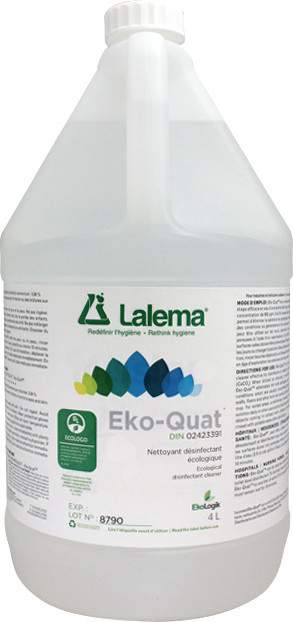
    • Use Eco-Friendly Disinfectants: Opt for disinfectants that are effective and environmentally friendly.

Tools to Facilitate Hygiene in Remote Work

  1. Reminder Apps: Use apps to schedule breaks and cleaning tasks.
  2. Checklists: Create lists for cleaning and organization routines.

Conclusion

Managing hygiene in remote work is essential for preserving health, well-being, and productivity. By adopting simple and regular habits, it is possible to create a healthy and pleasant home office environment. Investing time in maintaining your workspace is an investment in your own performance and professional satisfaction.

Cross-contamination: A major concern in production environments

A pharmaceutical plant is being clean by robots since cross-contamination is a major concern ion production environements.

Cross-contamination is a significant issue in production environments, especially in the food, pharmaceutical, and cosmetic industries. It can lead to health risks for consumers, costly product recalls, and damage to a company’s reputation. This article explores the causes of cross-contamination and presents strategies to effectively prevent it.

What is Cross-Contamination?

Cross-contamination occurs when undesirable substances, such as microorganisms, allergens, or chemical contaminants, are transferred from one surface, equipment, or product to another, thereby compromising the safety or quality of the final product.

Causes of Cross-Contamination

Human Handling
  1. Dirty Hands: Operators can transfer contaminants by touching different products without washing their hands.
  2. Contaminated Clothing: Uniforms can carry particles from one environment to another.
Shared Equipment
  1. Unclean Machines: Using the same machine for different products without proper cleaning.
  2. Utensils: Tools such as spoons, spatulas, or scales used for multiple products.
Environment
  1. Airflow: Airborne particles can be transported.
  2. Work Surface: Worktops not disinfected between production batches.
Raw Materials
  1. Inadequate Storage: Ingredients stored together without proper separation.
  2. Non-compliant Suppliers: Raw materials already contaminated upon receipt.

Consequences of Cross-Contamination

  1. Health Risks: Allergies, food poisoning, adverse reactions.
  2. Product Recalls: High financial costs and loss of customer trust.
  3. Regulatory Compliance: Legal penalties for failing to meet safety standards.

Strategies to Prevent Cross-Contamination

Good Manufacturing Practices (GMP)
  1. Standardized Protocols: Establish clear procedures for each production step.
  2. Staff Training: Raise awareness of risks and preventive measures.
  3. Documentation: Maintain records to ensure traceability.
Personnel Hygiene
  1. Frequent Handwashing: Before and after each handling.
  2. Clean Uniforms: Wear dedicated clothing in the production area.
  3. Personal Protective Equipment (PPE): Gloves, masks, caps to avoid contaminations.
Cleaning and Disinfecting Equipment
  1. Cleaning Procedures: Define methods for each equipment.
  2. Frequency: Clean after each use or product change.
  3. Cleaning Validation: Tests to verify the effectiveness of procedures.
Separating Production Areas
  1. Zoning: Physically delineate areas for different products or stages.
  2. One-Way Flow: Organize movements to avoid cross paths.
  3. Air Control: Ventilation systems to prevent particle dispersion.
Managing Raw Materials and Stocks
  1. Separate Storage: Separate allergens or sensitive products.
  2. FIFO Systems (First In, First Out): Use ingredients in order of receipt to avoid cross-contamination.
Supplier Control
  1. Rigorous Selection: Work with certified suppliers.
  2. Regular Audits: Check suppliers’ practices to ensure compliance.
Using Advanced Technologies
  1. Dedicated Equipment: Specific machines for certain products.
  2. Detection Systems: Sensors to identify contaminants.
Continuous Monitoring and Improvement
  1. Regular Analysis: Microbiological and chemical tests to detect contaminants.
  2. Internal Audits: Assess the effectiveness of measures in place.
  3. Feedback: Involve staff to identify areas for improvement.

Conclusion

Preventing cross-contamination is essential for ensuring the safety and quality of products in production environments. By adopting proactive strategies, training staff, and implementing rigorous procedures, companies can minimize risks, comply with regulations, and protect their reputation. Constant vigilance and continuous improvement are the keys to success in this field.

Disinfection: the benefice of using eco-friendly product

A modern office that priorize a green environment. A man use eco-friendly items to clean the office.

More and more businesses are looking to adopt sustainable practices to meet consumer expectations and contribute to environmental protection. Using eco-friendly cleaning products for disinfection is an important step in this direction. This article explores the benefits these products offer to businesses, going beyond mere environmental responsibility.
What is an Eco-Friendly Cleaning Product?

  1. Natural Ingredients: Formulated from biodegradable and non-toxic components.
  2. Sustainable Production: Manufactured with environmentally friendly methods.
  3. Recyclable Packaging: Use of recycled or recyclable materials for containers.
  4. Recognized Labels: Certified by organizations such as Ecologo, European Ecolabel, or Ecocert.

Health Benefits

  1. For Employees:
    • Reduced Irritations: Lower risk of allergies, skin, or respiratory irritations.
    • Healthier Work Environment: Improved indoor air quality.
    • Less Absenteeism: Decrease in illnesses related to chemical exposure.
  2. For Customers:
    • Increased Comfort: More pleasant atmosphere without strong chemical odors.
    • Safety: Lower risk for sensitive or allergic clients.

Environmental Benefits

  1. Biodegradability: Products break down without harming the ecosystem.
  2. Pollution Reduction: Less release of harmful substances into water and soil.
  3. Resource Economy: Less energy and raw materials used in production.

Economic Benefits

  1. Long-Term Costs:
    • Durability of Equipment: Less corrosive, they preserve surfaces and machinery.
    • Waste Reduction: Recyclable packaging reduces waste management costs.
    • Efficiency: Concentrated products require less quantity for the same result.
  2. Customer Attraction:
    • Positive Image: Enhanced reputation as a responsible business.
    • Differentiation: Stand out from the competition by adopting sustainable practices.
    • Loyalty: Eco-conscious customers prefer engaged businesses.
  3. Regulatory Compliance:
    • Law Anticipation: Comply with increasingly strict environmental regulations.
    • Avoid Penalties: Reduce the risk of fines related to harmful product use.

Implementation in the Company

  1. Product Selection:
    • Look for Labels: Choose certified eco-friendly products.
    • Compare Efficiency: Ensure products meet cleaning needs.
    • Test Products: Conduct trials to check compatibility with surfaces and equipment.
  2. Staff Training:
    • Awareness: Explain the benefits of eco-friendly products.
    • Usage Instructions: Train on specific dosages and methods.
    • Encouragement: Involve staff in the ecological approach.
  3. Communication:
    • Inform Customers: Highlight the company’s ecological commitment.
    • Transparency: Share efforts and results achieved.

Including Disinfection

  1. Eco-Friendly Disinfectants: Use disinfectants that are both effective and environmentally friendly.
  2. Disinfection Protocols: Implement standard protocols that align with sustainable practices.
  3. Educate Staff: Train employees on the use of eco-friendly disinfectants and their benefits.

Conclusion

Adopting eco-friendly cleaning products offers multiple benefits for businesses. Beyond environmental protection, it is a step that promotes employee health, enhances brand image, and can even generate long-term savings. By integrating eco-friendly disinfectants into cleaning protocols, businesses can ensure both a clean and sustainable environment.

Establishing good hygiene in hospitals and clinics

A conference room that is attended by hospital personnel for a seminar about hygiene in hospital and enhancing patient safety.

Hospitals and clinics are places where vulnerable patients seek care. Ironically, they can also be locations where infections are contracted if hygiene standards are not rigorously maintained. Nosocomial infections represent a significant challenge for healthcare systems. This article explores the challenges of hygiene in healthcare facilities and proposes measures to improve patient safety.

Challenges of Hygiene in Healthcare Facilities

Presence of Vulnerable Patients
  1. Weakened Immune Systems: Patients are more susceptible to infections.
  2. Invasive Procedures: Surgeries, catheters, and other procedures increase risks.
Multiplicity of Pathogens
  1. Resistant Bacteria: Such as methicillin-resistant Staphylococcus aureus (MRSA).
  2. Viruses and Fungi: Presence of various potentially dangerous microorganisms.
Complex Environment
  1. Constant Flow of People: Patients, visitors, medical staff.
  2. Large Area: Many zones to clean, from operating rooms to patient rooms.

Consequences of Nosocomial Infections

  1. Patient Health: Prolonged stays, complications, or even death.
  2. Financial Costs: Increased expenses for treating infections.
  3. Public Trust: Damage to the facility’s reputation.

Measures to Improve Hospital Hygiene

Hand Hygiene
  1. Training: Educate staff on the importance of handwashing.
  2. Accessibility: Install soap and sanitizer dispensers at strategic locations.
  3. Protocols: Establish standardized handwashing procedures.
Cleaning and Disinfecting Surfaces
  1. Effective Products: Use disinfectants suitable for targeted microorganisms.
  2. Frequency: Regularly clean frequently touched surfaces.
  3. Specialized Equipment: Use technologies like UV lamps for disinfection.
Sterilizing Medical Equipment
  1. Strict Protocols: Follow rigorous sterilization procedures.
  2. Quality Control: Regularly verify the effectiveness of sterilizers.
  3. Disposable Equipment: Use single-use devices when possible.
Managing Medical Waste
  1. Waste Separation: Properly classify biological, sharp, and other types of waste.
  2. Secure Disposal: Work with specialized services for waste treatment.
  3. Staff Training: Raise awareness about safe waste handling.
Monitoring and Controlling Infections
  1. Dedicated Committees: Establish teams to monitor nosocomial infections.
  2. Data Collection: Track infection cases to identify trends.
  3. Rapid Response: Isolate infected patients and implement corrective measures.
Staff and Management Engagement
  1. Safety Culture: Promote a proactive attitude towards infection prevention.
  2. Shared Responsibility: Every staff member should feel concerned.
  3. Recognition: Value the efforts of staff adhering to hygiene standards.

Conclusion

The challenges of hygiene in hospitals and clinics are complex and require a multidimensional approach. By implementing effective measures and involving all stakeholders, it is possible to significantly reduce nosocomial infections. Patient health and safety depend on a constant commitment to excellence in hygiene.

The importance of disinfection in schools

A classroom with teachings of hygiene, sanitization and disinfection. The teacher teaches to his student the importance of disinfection in schools ensuring a healthy learning environment.

Schools are places where numerous children and adults interact daily. This close contact can facilitate the transmission of infectious diseases if adequate hygiene measures are not implemented. Regular disinfection of schools is essential to ensure the health and well-being of everyone. This article examines the importance of disinfection in schools and proposes strategies to maintain a healthy environment.

Why is Disinfection Crucial in Schools?

Rapid Disease Transmission

  1. Physical Proximity: Classrooms, cafeterias, and playgrounds are spaces where close contact is frequent.
  2. Variable Personal Hygiene: Children, especially younger ones, may not have acquired good hygiene practices.
  3. Shared Objects: School supplies, toys, and sports equipment are handled by multiple individuals.

Impact on Public Health

  1. Epidemics: Schools can be hotspots for the spread of diseases such as flu, gastroenteritis, or chickenpox.
  2. School Absences: Illnesses lead to absences that affect learning.
  3. Community Spread: Children can bring infections home, impacting the wider community.

Key Areas Needing Disinfection

Classrooms

  1. Desks and Chairs: Frequently touched surfaces by students.
  2. Educational Materials: Books, computers, interactive whiteboards.

Sanitary Facilities

  1. Toilets: Require thorough cleaning and disinfection.
  2. Sinks and Faucets: Major contact points for germs.

Cafeterias and Kitchens

  1. Tables and Chairs: Need cleaning between each use.
  2. Utensils and Trays: Disinfection to prevent foodborne illnesses.

Play Areas and Sports Equipment

  1. Outdoor Play Equipment: Swings, slides, etc.
  2. Indoor Sports Equipment: Balls, gym mats.

Strategies for Effective Disinfection

Establish a Disinfection Plan

  1. Frequency: Set regular intervals for cleaning and disinfection.
  2. Priorities: Identify high-risk areas that need special attention.
  3. Appropriate Products: Use approved disinfectants for maximum effectiveness.

Train Staff

  1. Cleaning Techniques: Train janitorial staff on best practices.
  2. Safety: Raise awareness about the safe use of chemical products.

Engage the School Community

  1. Student Education: Teach the importance of personal hygiene, such as handwashing.
  2. Staff Participation: Encourage teachers to maintain classroom cleanliness.
  3. Parent Communication: Inform about the measures taken and involve them in promoting hygiene.

Use Modern Technologies

  1. UV Disinfection: Use UV devices to disinfect rooms.
  2. Fogging: Apply disinfectants in fog form to cover large areas.

Infection Prevention

Promote Handwashing

  1. Washing Stations: Install additional sinks and soap dispensers.
  2. Hand Sanitizers: Provide alcohol-based hand gels.

Manage Sick Absences

  1. Clear Policy: Encourage parents to keep sick children at home.
  2. Monitoring: Track illness trends to respond quickly.

Conclusion

Disinfection in schools is a collective responsibility that requires collaboration among administration, staff, students, and parents. By implementing effective strategies and raising awareness within the school community, it is possible to reduce the spread of diseases and create a safe and healthy learning environment.

Using UV technology for disinfection

Modern laboratory with a lot of technology related to UV is stored. Scientifics are using UV technology to research its use for disinfection.

Disinfection is crucial for maintaining healthy environments in hospitals, schools, and businesses. UV (ultraviolet) technology has emerged as an innovative and effective method to eliminate harmful microorganisms without using chemicals. This article explores how UV disinfection works, its advantages, and its applications.

Understanding UV Technology

Ultraviolet rays are a form of electromagnetic radiation invisible to the naked eye. They are classified into three categories:

  • UVA: Wavelength from 315 to 400 nm.
  • UVB: Wavelength from 280 to 315 nm.
  • UVC: Wavelength from 200 to 280 nm.

UVC is used for disinfection due to its ability to inactivate microorganisms.

How Does UVC Disinfect?

  1. DNA/RNA Destruction: UVC rays penetrate the cells of microorganisms and damage their genetic material.
  2. Pathogen Inactivation: Bacteria, viruses, and protozoa can no longer reproduce or cause infections.
  3. Rapid Efficiency: Inactivation occurs within seconds to a few minutes of exposure.

Advantages of UV Disinfection

  1. Chemical-Free: No toxic residues or need to handle hazardous substances.
  2. High Efficacy: Capable of eliminating a wide range of microorganisms, including those resistant to chemical disinfectants.
  3. Speed: Rapid disinfection of surfaces and air.
  4. Cost-Effective: Reduces long-term costs related to the purchase of chemicals and labor.

Applications of UV Technology

  1. Medical Field:
    • Hospitals and Clinics: Disinfection of operating rooms, patient rooms, medical equipment.
    • Laboratories: Maintaining sterile conditions for sensitive experiments.
  2. Food Industry:
    • Production Plants: Disinfecting work surfaces, tools, and air to prevent contamination.
    • Storage: Extending the shelf life of food by eliminating microorganisms.
  3. Water Treatment:
    • Purification Plants: Eliminating pathogens in drinking water.
    • Pools and Spas: Reducing chlorine usage.
  4. Public Environments:
    • Public Transportation: Disinfecting buses, trains, and airplanes.
    • Schools and Offices: Maintaining a healthy environment for occupants.

Types of UV Equipment

  1. Portable UV Lamps: For targeted surface disinfection.
  2. Fixed UV Systems: Installed in ventilation ducts to purify the air.
  3. Autonomous UV Robots: Mobile devices programmed to disinfect large areas.

Precautions and Limitations

  1. Safety: UVC rays are harmful to skin and eyes. Protective measures, such as ensuring no people are in the treated area, are essential.
  2. Shadows: UV does not penetrate opaque surfaces. Shadowed areas may not be disinfected.
  3. Maintenance: UV lamps lose effectiveness over time and need regular replacement.

Integration with Other Disinfection Methods

UV technology is often used in combination with other methods:

  1. Manual Cleaning: To remove dirt and debris that can shield microbes.
  2. Chemical Disinfectants: For a synergistic approach in critical environments.

Conclusion

UV technology offers an innovative and effective solution to invest in for disinfection across various sectors. By understanding its operation and applying it correctly, businesses and institutions can significantly improve hygiene quality, reduce infections, and provide safer environments. However, it is crucial to observe safety precautions to maximize benefits while minimizing risks.

Hygiene in public transportation

A bus that has been half emptied for an employee to disinfect with his equipement. An employee has Personnal Protection Equipement and his making sure the hygiene in public transportation meet his standart.

Public transportation is essential for urban mobility, but it also serves as a space where microbes can spread rapidly due to high passenger density. Maintaining hygiene in these environments is crucial for public health. This article examines the challenges and solutions for ensuring optimal hygiene in public transportation.

Challenges of hygiene in public transportation

  1. High Passenger density: Close proximity facilitates the transmission of germs.
  2. Frequently touched surfaces: Handles, handrails, seats.
  3. User variability: Diverse passengers with varying hygiene habits.
  4. Limited cleaning cycles: Difficulty in frequent cleaning due to tight schedules.

Impacts on public health

  1. Spread of infectious diseases: Flu, colds, gastrointestinal illnesses.
  2. Perception of safety: Influence on users’ confidence in public transportation.
  3. Economic consequences: Work absences, increased health costs.

Measures to Improve Hygiene

Enhanced cleaning and disinfection

  1. Increased frequency: More frequent cleaning of vehicles and stations.
  2. Effective products: Use approved disinfectants against a wide range of microbes.
  3. Focus on High-Touch Points: Handles, buttons, ticket dispensers.

Innovative hygiene and disinfection technologies

  1. UV-C disinfection: Install UV systems to eliminate germs.
  2. Antimicrobial coatings: Apply materials that reduce microbe survival on surfaces.
  3. Sensors and AI: Monitor high-risk areas for targeted intervention.

User Engagement

  1. Communication: Posters and announcements to encourage good hygiene practices.
  2. Sanitizing stations: Provide hand sanitizer in stations and vehicles.
  3. Health policies: Mask-wearing during pandemics, restrictions when symptomatic.

Training Staff

  1. Clear protocols: Develop standardized cleaning procedures.
  2. Appropriate equipment: Provide PPE for cleaning staff.
  3. Awareness: Ongoing training on health risks and preventive measures.

Stakeholder Cooperation

  1. Transport authorities: Lead the implementation of measures.
  2. Local governments: Provide financial and regulatory support.
  3. Scientific community: Research effective disinfection methods.
  4. Public: Actively adopt responsible behaviors.

Conclusion

Maintaining hygiene in public transportation is a complex challenge that requires a multidimensional approach. By combining technical measures, effective policies, and cooperation among all stakeholders, it is possible to ensure a safe environment for users and enhance confidence in public transportation systems.

Cleaning protocols for flu season

A modern office with employees using multiple cleaning protocols while it is flu season. Employees are using face masks and gloves to clean surfaces and disinfect.

Flu season presents a major challenge for businesses, with an increased risk of absenteeism and reduced productivity. Flu viruses spread quickly in enclosed spaces, especially when cleaning protocols are not adequately followed. This article proposes effective strategies to enhance cleaning protocols during this critical period, protecting the health of your employees and ensuring the continuity of your operations.

Understanding how the flu virus spread

Modes of transmission

  1. Respiratory droplets: Sneezing, coughing, and talking spread droplets containing the virus.
  2. Contact with contaminated surfaces: The virus can survive for several hours on frequently touched surfaces.
  3. Interpersonal transmission: Close contact between individuals facilitates the spread.

High-Risk surfaces

  1. Door handles
  2. Light switches
  3. Keyboards and mice
  4. Phones
  5. Common areas such as meeting rooms and cafeterias

Enhancing cleaning protocols

Increasing cleaning frequency

  1. Daily cleaning: Ensure daily cleaning of frequently touched surfaces.
  2. Regular disinfection: Use effective disinfectants against viruses to eliminate pathogens.

Using appropriate disinfection products

  1. Approved disinfectants: Choose products known for their effectiveness against flu viruses.
  2. Contact time: Adhere to the recommended contact time for maximum efficacy.
  3. Safety: Ensure that the products used are safe for employees and the environment.

Training Personnel

  1. Proper techniques: Train staff on effective cleaning and disinfection methods.
  2. Personal Protective Equipment (PPE): Wear gloves, masks, and, if necessary, gowns for protection.
  3. Personal hygiene: Encourage handwashing after each cleaning session.

Involving All Employees

Hand Hygiene

  1. Sanitization stations: Install hand sanitizer dispensers at strategic locations.
  2. Informative signage: Place posters reminding employees of the importance of handwashing.

Respiratory etiquette

  1. Cover mouth and nose: Use a tissue or the elbow when coughing or sneezing.
  2. Disposable tissues: Provide tissues and closed bins for disposal.

Sick Leave Policies

  1. Encourage rest: Urge sick employees to stay home to avoid contamination.
  2. Remote work: Offer remote work options where possible.

Improving Indoor Air Quality

Ventilation

  1. HVAC Systems: Maintain and regularly clean heating, ventilation, and air conditioning systems.
  2. Natural ventilation: Open windows to renew air when conditions allow.

Air purifiers

  1. HEPA Filters: Install air purifiers with HEPA filters to remove viral particles.

Surveillance and communication

Monitoring absences

  1. Identify trends: Quickly detect an increase in flu-related absences.
  2. Rapid response: Strengthen cleaning measures if necessary.

Informing staff

  1. Regular updates: Communicate the evolving situation and measures taken.
  2. Education: Provide resources on flu prevention.

Conclusion

Flu season requires heightened vigilance in cleaning and prevention. By implementing strengthened protocols and involving all staff, businesses can significantly reduce the risk of virus spread. These efforts help maintain a healthy work environment, ensuring the smooth operation of your business.

Nosocomial infections: improving hospital hygiene to effectively reduce risks

A hospitle isle that is being clean by following a guide to improve the hospital hygiene to effectively reduce risk of noscomial infections.

Nosocomial infections, acquired in healthcare settings, pose a major challenge to the global health system. They not only affect patient health but also increase medical costs and prolong hospital stays. This article explores key measures to improve hospital hygiene and effectively reduce nosocomial infections.

Understanding nosocomial infections

What is a nosocomial infection?

A nosocomial infection is an infection acquired by a patient during their stay in a hospital or another healthcare facility, which was neither present nor incubating at the time of admission.

Risk factors

  1. Weakened immune systems: Vulnerable patients are more likely to contract infections.
  2. Invasive procedures: Catheters, probes, and surgical interventions increase the risk.
  3. Antibiotic resistance: Overuse of antibiotics has led to the emergence of resistant bacteria.

Measures to strengthen hospital hygiene

Hand hygiene

  1. Proper technique: Wash hands with soap and water for at least 20 seconds.
  2. Disinfection: Use alcohol-based hand sanitizers as a supplement to handwashing.
  3. Key moments: Before and after patient contact, before aseptic procedures, and after exposure to bodily fluids.

Sterilization and disinfection of equipment

  1. Sterilization: Use autoclaves to sterilize surgical instruments.
  2. Disinfection: Clean non-invasive equipment with approved disinfectants.
  3. Quality control: Perform regular tests to ensure the effectiveness of sterilization processes.

Cleaning of surfaces and environment

  1. Scheduling: Establish a regular cleaning schedule for all areas.
  2. Appropriate Products: Use effective detergents and disinfectants against hospital pathogens.
  3. Staff Training: Train cleaning staff in techniques specific to healthcare environments.

Air quality control

  1. Filtration systems: Install HEPA filters in critical areas such as operating rooms.
  2. Positive/Negative air pressure: Use controlled pressure rooms to prevent the spread of infectious agents.

Medical waste management

  1. Waste Separation: Classify waste based on its hazard level.
  2. Safe Disposal: Use appropriate containers for sharps and biological waste.
  3. Regulation Compliance: Adhere to local and national laws on medical waste management.

Staff training and awareness

  1. Educational Programs: Provide continuous training on hygiene protocols and infection prevention.
  2. Safety Culture: Encourage a proactive attitude towards infection prevention.
  3. Individual Responsibility: Ensure each staff member understands their role in maintaining a safe environment.

Involvement of patients and visitors

  1. Education: Inform patients about the hygiene measures they can take.
  2. Visitor Policies: Limit visits during outbreaks and provide clear instructions on hygiene practices.

Infection surveillance and management

  1. Surveillance system: Collect data on infections to identify trends.
  2. Incident analysis: Investigate nosocomial infection cases to determine causes and prevent recurrence.
  3. Infection control committees: Create multidisciplinary teams to coordinate efforts.

Conclusion

Reducing nosocomial infections is a priority to invest in patient safety and the efficiency of healthcare. By strengthening hospital hygiene practices, training staff, and involving all stakeholders, it is possible to significantly decrease infection rates. These efforts contribute not only to patient health but also to increased trust in the healthcare system.

Cleaning sensitive surfaces: best practices for effective and safe maintenance

A modern laboratory with a man in scientific dress is cleaning sensitive surfaces while maintaning the best practices for effective and safe maintenance.

Sensitive surfaces, such as electronic equipment, delicate materials, or sterile areas, require special attention during cleaning. Improper handling can lead to material damage or health risks. This article presents the best practices to ensure effective and safe cleaning of these surfaces.

Identifying sensitive surfaces

  1. Electronic equipment: Computers, phones, touch screens.
  2. Delicate materials: Untreated wood, special fabrics, artworks.
  3. Sterile areas: Laboratories, clean rooms, medical facilities.

General cleaning principles

  1. Use the right products: Choose cleaning agents that won’t damage the surface.
  2. Gentle methods: Avoid excessive scrubbing or abrasive tools.
  3. Safety first: Wear gloves and, if necessary, personal protective equipment.

Cleaning electronic equipment

  1. Unplugging: Always unplug devices before cleaning them.
  2. Suitable products: Use wipes designed for electronics or a lightly dampened soft cloth.
  3. Avoid excessive moisture: Never spray liquid directly on the device.

Caring for delicate materials

  1. Pre-test: Test the cleaning product on a small, inconspicuous area first.
  2. Natural products: Opt for mild cleaners like neutral soap.
  3. Specific techniques: Follow the grain when cleaning wood; refer to care instructions for fabrics.

Maintaining sterile areas

  1. Strict protocols: Follow established procedures to avoid contamination.
  2. Appropriate disinfectants: Use disinfectants approved for sterile environments.
  3. Staff training: Ensure all employees are trained in specific cleaning techniques.

Avoiding common mistakes

  1. Don’t mix products: Some mixtures can be dangerous or ineffective.
  2. Avoid inappropriate tools: Abrasive sponges or hard brushes can scratch or damage surfaces.
  3. Proper dosage: Use the recommended amount of product to avoid residue.

Storing and handling cleaning products

  1. Proper storage: Keep products in their original packaging with labels visible.
  2. Safety: Store products out of reach of unauthorized personnel.
  3. Responsible disposal: Dispose of expired or unusable products according to local regulations.

Conclusion

Cleaning sensitive surfaces requires an informed and delicate approach. By following best practices and using appropriate products, you can ensure the longevity of equipment and the safety of the work environment.

Preventing epidemics in the workplace: Effective measures for a healthy environment

A modern workplace is very crowded with people. The employees have masks and gloves. They are cleaning the desk with product for disinfection to prevent epidemics.

Epidemics can have a devastating impact on businesses, affecting employee health and disrupting operations. Therefore, preventing their spread in the workplace is crucial. This article presents effective measures to protect your staff and maintain a healthy work environment.

Promoting personal hygiene

First, you should promote personal hygiene among employees.

  • Frequent handwashing: Install handwashing stations and hand sanitizer dispensers.
  • Respiratory etiquette: Encourage covering the mouth when coughing or sneezing.
  • Education: Raise awareness about good hygiene practices.

Maintaining a clean environment

Next, focus on maintaining a clean environment in the workplace.

  • Regular cleaning: Disinfect frequently touched surfaces, such as doorknobs, keyboards, and phones.
  • Adequate ventilation: Ensure proper air circulation to reduce airborne pathogens.
  • Waste management: Quickly dispose of potentially contaminated waste.

Implementing workplace health policies

Additionally, implement effective workplace health policies.

  • Sick leave: Encourage your sick employees to stay home for the sake of their health and your other employees.
  • Telecommuting: Facilitate remote work whenever possible.
  • Medical monitoring: Conduct regular health checks.

Ensuring transparent communication in time of epidemics

Furthermore, ensure transparent communication with your staff.

  • Updated information: Provide regular updates on epidemics and measures taken.
  • Open channels: Allow employees to ask questions and express concerns.

Training staff for epidemics situations

Moreover, you should train your staff to handle epidemic situations.

  • Emergency preparedness: Train them on protocols in case of an epidemic.
  • Use of PPE: Teach the correct usage of personal protective equipment.

Collaborating with health authorities to prevent epidemics

Finally, collaborate with health authorities to ensure compliance and safety.

  • Compliance: Follow all the guidelines from health organizations.
  • Reporting: Inform authorities in case of confirmed cases within the company.

Conclusion

Preventing epidemics in the workplace is a collective responsibility. By implementing proactive strategies, businesses can protect employee health and ensure operational continuity. Companies that adhered to primary, secondary, and tertiary prevention levels according to the WHO were less affected during the COVID-19 pandemic.

Disinfection: a guide to find the proper product for your company

A modern office where a man is inspection the type of disinfectant in front of him. The disinfection is a priority for this office.

Choosing the right disinfectant: A comprehensive guide

Selecting the appropriate disinfectant is crucial for maintaining a healthy and safe environment. With so many products available, it can be challenging to determine which one is best suited for your business. This guide will help you identify the essential criteria to make the right choice.

Identifying the disinfection specific needs

First, you need to identify the specific needs of your environment.

  1. Type of contaminants: Understand the microorganisms you need to target, such as bacteria, viruses, or fungi.
  2. Surfaces to be treated: Consider the materials involved, including sensitive areas, food zones, and electronic equipment.
  3. Frequency of use: Decide if the disinfectant will be used daily, weekly, or occasionally.

Considering the effectiveness of disinfection

Next, evaluate the effectiveness of the disinfectant.

  1. Spectrum of action: Choose broad-spectrum disinfectants that can tackle a wide range of microorganisms.
  2. Contact time: Select a product with an action time that matches your operational needs.
  3. Standards and certifications: Ensure the disinfectant meets regulatory approvals and ISO standards.

Evaluating safety and environmental impact

Now, focus on safety and environmental impact.

  1. Toxicity: Opt for products without harmful compounds to protect health.
  2. Biodegradability: Prefer eco-friendly disinfectants to minimize environmental harm.
  3. Compatibility: Confirm that the product does not damage surfaces or equipment.

Analyzing cost and availability for disinfection

Then, consider the cost and availability of the disinfectant.

  1. Price: Set a budget that accounts for the cost per use, not just the purchase price.
  2. Availability: Ensure a steady supply to avoid stockouts.
  3. Formulation: Choose between concentrates that need dilution or ready-to-use solutions.

Training Personnel on Use

It’s important to train your personnel on proper use.

  1. Clear instructions: Provide precise guidelines for applying disinfectant products.
  2. Protective equipment: Inform them about necessary PPE during use.
  3. Storage and handling: Teach best practices to prevent accidents.

Conclusion

Ultimately, selecting the right disinfectant requires a thorough analysis of your needs and careful consideration of product characteristics. Remember, disinfectants only kill germs and inactivate viruses if used according to the instructions. Making an informed choice will help ensure the health of your employees and the sustainability of your business.

Better understanding disinfection

Introduction

Disinfection is the process by which microorganisms such as bacteria are eliminated or reduced. The objective of disinfection is to prevent the spread of infectious diseases by reducing the number of microorganisms present. Disinfection can be achieved in various ways, including the use of disinfectant chemicals such as alcohol-based disinfectants, quaternary ammonium compounds, sodium hypochlorite (bleach), or hydrogen peroxide.

Effective Planning and Disinfection Management

This would be the planning. We need to develop a detailed plan for management and disinfection. It is important to identify high-risk areas, determine the necessary equipment, outline the procedures to be followed, and define the responsibilities of the individuals involved in the disinfection process.

  • This is training. It involves ensuring that the personnel responsible for management and disinfection are trained in good hygiene and disinfection practices. They should be familiar with the procedures, the cleaning/disinfection products to be used, and the safety precautions to be taken.
  • This is personal hygiene. We should encourage and maintain good personal hygiene practices among the staff. This includes habits such as regular handwashing with soap, the use of hand sanitizers, and wearing appropriate protective clothing.
  • This is regular cleaning. It entails establishing a regular cleaning schedule for all surfaces and high-risk areas.
  • This is proper disinfection. It involves using appropriate disinfectants to kill germs and reduce the risk of infection.
  • This is ventilation. We should ensure good ventilation in indoor spaces to facilitate the circulation of fresh air.
  • This is waste management. We need to implement an appropriate system for waste management, ensuring the safe and hygienic disposal of potentially contaminated materials.
  • This is monitoring and evaluation. It entails establishing regular monitoring and evaluation procedures to assess the effectiveness of the management and disinfection measures. Adjustments should be made if necessary.
  • This is raising awareness among staff and relevant individuals about hygiene practices.
  • This is compliance with regulations. We must ensure that regulations regarding hygiene are adhered to and that standards are upheld. Therefore, it is important to stay informed about updates and recommendations from health authorities.
The uses/benefits of disinfectant

Eliminates germs and bacteria, ensuring a clean and hygienic environment for everyone.

Surface Disinfection: This category involves the disinfection of surfaces such as countertops, doorknobs, switches, phones, keyboards, faucets, etc. There are specifically formulated disinfectant products to eliminate germs and bacteria on surfaces. These products can be disinfecting wipes, sprays, or disinfectant solutions to be used with a clean cloth.

Hand Disinfection: This refers to the disinfection of hands to eliminate germs and bacteria that may be present. The use of alcohol-based hand sanitizers is common in this category. Hand sanitizers are usually available as gels or liquid solutions. It is recommended to rub the hands with the sanitizer for at least 20 seconds until it dries.

Medical Instrument Disinfection: This category primarily concerns healthcare facilities and medical professionals. It involves the disinfection of medical instruments such as scalpels, syringes, injection devices, probes, etc. In this case, more complex disinfection procedures may be required, such as the use of autoclaves, dry heat sterilizers, or specific chemical agents.

To conclude, disinfection is essential to ensure good hygiene in the workplace, and it requires precise steps to be properly carried out.

links:https://www.lalema.com/

Let’s talk about disinfection (once more)

How to safely perform cleaning and disinfection a surface soiled with bodily fluid and dispose of waste properly?

Here is some of the content from my exclusive training on Infection Prevention and Control in the Presence of Body Fluids. This training (in French with English documentation), presented in the form of short video clips (nearly forty), lasts approximately 2 hours and covers several exclusive and relevant content for hygiene and sanitation workers.

Disinfection

OVERVIEW OF THE CONTENT OF A TRAINING ON DISINFECTION TECHNIQUES

  • The main microbes to which sanitary maintenance workers can be exposed, the associated risks and the means of transmission
  • Basic concepts in sanitary maintenance for cleaning and disinfecting surfaces
  • The different body fluids (body fluids) and the associated risk factors
  • Products and accessories for cleaning and disinfection
  • Personal protective equipment
  • Cleaning and disinfection techniques including hand washing.

THE MAIN MICROBES TO WHICH HEALTH MAINTENANCE WORKERS MAY BE EXPOSED, THE ASSOCIATED RISKS AND THE MEANS OF TRANSMISSION

  • Microbes
  • Viruses or bacteria
  • Reproduction of bacteria
  • Survival of bacteria on surfaces
  • Infectious risk
  • Transmission of infections
  • Virus or bacteria

BASIC CONCEPTS IN SANITARY MAINTENANCE FOR THE CLEANING AND DISINFECTIONS OF SURFACES

  • Basics
  • Sinner’s Circle
  • Wetting power
  • Micelles
  • Foaming power
  • PH scale
  • Eradication of microbes
  • Contact time
  • DIN
  • Types of disinfectants
  • Why dilute a product
  • Always read the manual
  • 7 ways to make maintenance safer

THE DIFFERENT BODY FLUIDS (BIOLOGICAL LIQUIDS) AND THE ASSOCIATED RISK FACTORS

  • Body fluids and associated risks
  • Body fluids (body fluids)
  • Risk factors

PRODUCTS AND ACCESSORIES FOR CLEANING AND DISINFECTION

  1. Produits et accessoires
  2. Trousse de matériel

LES ÉQUIPEMENTS DE PROTECTION INDIVIDUELLE

  • Personal protective equipment (PPE)
  • Hand hygiene
  • Dressing procedure
  • Undressing procedure
  • Practical advice
  • Wearing the mask

CLEANING AND DISINFECTION TECHNIQUES

  • Cleaning and disinfection steps
  • Steps to follow
  • Cleaning and disinfection procedure
  • Waste management
  • What is biomedical waste

FORMATIVE ASSESSMENT

A training cannot be complete without a formal evaluation! This is why we offer each participant a quiz of 10 questions before issuing a superb attestation!

So, are you going to try?

How to properly clean reusable protective equipment

Clean medical inhaler
Photo by Mockup Graphics on Unsplash

When we talk about disinfection, we talk about the prevention and control of infection in the environment. Therefore, equipment used for respiratory therapy is considered semi-critical. The equipment must then be cleaned and disinfected properly between patients. The WHO gives us the proper maintenance of respiratory equipment in procedures to follow. The procedures are checklists in steps of a cycle. Let’s explore all the summarized steps up to the cycle finish. And yes, the cleaning step is before the disinfection step!

Checklists for care, cleaning, disinfection and sterilization of respiratory devices

1. Perform hand hygiene

The title and image say it all

2. Don appropriate personal protective equipment

The personal protective equipment to be worn during the disinfectant preparation includes surgical mask/respirator, googles/face shield, long-sleeved fluid resistant gown/gown plus apron, rubber gloves and boots or closed work shoes.

3. Wash with detergent and rinse with clean water

The external device surfaces must be wiped with a damp cloth or disposable wipe that is soaked in detergent and clean water. Then, remaining detergent residue must be wiped off with a dry lint-free cloth. A mechanical action (scrubbing/brushing) should be used to remove visible dirt deposits and calcifications.

4. Disinfect

4a. Physical disinfection – Heat for heat resistant equipement (steam/hot-water)

A high-level of physical disinfection can be achieved with steam (e.g. autoclaving at lower temperature) or hot-water at least 121°C. This is an inexpensive and effective method for sterilization or high-level disinfection.

4b. Chemical disinfection for plastic plus other parts that can be damaged by heat

b) If the disinfection needs to be with chemicals solutions, it should be performed in a well-ventilated area and away from patients. Use a disposable wipe or a fresh cloth that is soaked in a compatible disinfectant. Hydrogen peroxide 0.5% or ethanol 70-90%. Wipe from top to bottom and avoid contact with electrical connectors.

5. Dry equipment / Rinse equipment

a) Physical equipment often has a drying feature within the machine (e.g. washer, pasteurizer or autoclave). Following pasteurization, the wet equipment is typically dried in a hot-air drying cabinet or air-dried. Make sure to carefully inspect and ensure that no water is left in the equipment.

b) If a chemical solution was used for disinfection, rinse the equipment with sterile or clean water (i.e. water boiled for 5 mins and cooled down). It is preferred to use sterile water for rinsing off residual liquid chemical disinfectant from the respiratory device.

6. Store equipment in closed packages

Last step. Title says it all.

This was a summary of the Care, cleaning and disinfection of respiratory equipment in sterile services department’s article by World Health Organization.

This article is a free translation of WHO’s article.

Source:
World Health Organization
– https://www.who.int/publications/m/item/care-cleaning-and-disinfection-of-respiratory-equipment-in-sterile-services-department
– https://www.who.int/images/default-source/health-topics/coronavirus/care-cleaning-disinfection-of-respiratory-equipment.tmb-479v.png?sfvrsn=14530f0b_1

What’s best? To clean or to disinfect?

When it comes to cleanliness, some people are mixing technical terms leading to ambiguity. It is like mixing chemicals together: That is not a good idea! To keep it simple, we’ll just give a real definition.

Deteriorated surfaces definition

A deteriorated surface shows wear off sign often caused by time or misuse.

Deterioration is one of three elements of impairment of property, the others being functional obsolescence (or obsolescence) and economic obsolescence.

surfaces-vetustes definition

Safe surfaces definition

Safe surface means that it is safe to health. Such surface is healthy or good for health often because of risk management. In the food industry, this is why we often refer to it as food safety.
Safe is also synonymous to hygienic !

corridor-hopital-lalema definition

Disinfected surfaces definition

Disinfection is a voluntary momentary removal operation of certain bacteria (if it comes to “all germs” we refer more to sterilization), so as to stop or prevent infection or the risk of infection or superinfection by pathogenic or undesirable microorganisms or viruses.

For example:

  • To sanitize a surface eliminates 99.9% of microorganisms (This is a 1,000 X reduction)
  • To disinfect a surface removes 99.999% of microorganisms (This is a 100,000 X reduction)
  • To sterilize a surface or instrument removes 99.9999% of microorganisms (This is a 1,000,000 X reduction)

Obviously, “momentarily” is a key fator because the surface will be contaminated again as soon a a contaminant will enter in contact with the it. That’s why some disinfectants have a residual effect that prolongs the action of disinfectant for a certain time.

biofilm-1024x767 definition

To learn more

Visit l’Academy Lalema for a whole lot of online training in sanitation and surface disenfection..

Sources: Larousse, Wikipedia, Linternaute

Disposable Microfiber, The First Step In The Disinfection Process

Disposable microfiber cloth system

In the past, we have often lauded the advantage of microfiber for cleaning. This is repeated today, but with the use of a disposable microfiber as the first step in the disinfection process. Of course, we are talking about cleaning first, then disinfecting. However, the products highlighted in this article are compatible with common disinfectants. These products are Rubbermaid‘s Hygen single-use microfiber swabs and wipes.

WHAT IS A MICROFIBER AGAIN?

Microfiber is a synthetic textile fiber (polyester, polyamide or a mixture) that is very fine and light with a denomination which is less than one decitex. A microfiber (filament) is characterised by its small diameter, the nature of its fiber and its structure. Therefore, not all microfibers are the same or of the same quality. This revolutionary material has quickly become a must in the hygiene, health and automotive sectors. To know more about it, read this article, Spotlight on microfiber!

THE HYGEN LINE FROM RUBBERMAID

The Hygen line was designed specifically for the healthcare industry. It is an excellent option for any facility looking to improve its cleaning efficiency, especially during the COVID-19 period. The HYGEN disposable microfiber pad and wipe contribute to the area cleaning as the first step in the disinfection process.

Microfiber pads and wipes

Disposable Microfiber Pads HYGEN
  • They eliminate 99.7% or more of the viruses and bacteria tested to help improve cleaning efficiency. And this was tested with water only
  • Help reduce cross-contamination with disposable pads/wipes that encourage cleaning with new pads/wipes for each area or task
Disposable Microfiber Wipes HYGEN
  • They are compatible with common disinfectants, including Quat (does not bind), bleach and hydrogen peroxide
  • Built-in scrub strips are made of polyester to help effectively remove dirt

DEMONSTRATION OF THE DISPOSABLE MICROFIBER

Here’s a video from Rubbermaid Commercial Products. They demonstrated the benefit of their Hygen disposable microfiber wipe compared to a paper towel and a disinfectant wipe. They use a fluorescent marker to demonstrate and verify cleaning practices.

Thus, using this disposable microfiber with a disinfectant provides an added layer of assurance. They will clean and disinfect well your floors and surfaces by combining the microbe removal power of the microfiber with the disinfectant’s killing power.

Electrostatic disinfection

Siozen electrostatic sprayer

Since the beginning of the pandemic, demands for electrostatic sprayers have exploded as an efficient way to disinfect key touch points and ensure environmental safety. While effective on a wide range of surfaces, it is important for cleaning teams to understand how it works, the cost considerations and the best facilities for using it. Therfore, this is a free translation of Cleanlink‘s article, What to know about electrostatic spraying.

What’s electrostatic disinfection

Electrostatic spraying or disinfection is the process of spraying an electrostatically charged mist onto surfaces and objects.

The electrostatic sprayer is electrically charged, allowing the specialized solution and disinfectants to envelop and evenly coat all types of surfaces. Designed to kill germs, bacteria and various types of viruses. It is a safe, fast, effective and non-contact application to limit the risk of cross-contamination.

How does it work?

Siozen - how it works

Electrostatic sprayers use positively charged atomized particles to electromagnetically adhere disinfectant chemicals to negative target surfaces.

They use an electrode inside the sprayer to atomize the cleaning solution. The particles emerge from the nozzle as a spray that clings to any contact points it can find.

For example, no matter what angle it is used for surfaces disinfection, the droplets created by the electrostatic sprayer cause the disinfectant to cling to areas such as chairs, under tables or desks.

Although it is easy to apply, well-trained personnel is essential to ensure that the application process is optimal and safe for the staff.

What are the costs?

The cost generally depends on the type of facility as well as the size of the area to be treated.

In the long-term, electrostatic disinfection protects businesses from costly financial issues associated with contagious healthcare infections. It also reduces the costs associated with providing effective disinfectant solutions.

Is it effective against COVID-19

This depends since the electrostatic sprayer does not, in itself, kill COVID-19 or the coronavirus. The disinfectant to be used in conjunction with this technology must be on the list of disinfectants with evidence for use against COVID-19 by Health Canada. Lalema‘s Myosan TB is one of them.

What types of properties are best suited for electrostatic disinfection?

This process is perfect for a variety of property types, including office buildings, healthcare facilities, shopping centers, industrial parks, condominiums, educational facilities, and government and hospitality projects. It also reaches a vast number of areas that highly covered by bacteria, otherwise difficult to access with standard cleaning methods by applying a uniform, solid coating to all surfaces.

Electrostatic disinfection is widely used in healthcare facilities as a safe and effective process in viral infection control programs, providing non-contact cleaning, thereby limiting the spread of bacteria.

Take a look at our sprayers/misters!

Free translation of What to know about electrostatic spraying by Cleanlink

Sources:
– https://www.cleanlink.com/news/article/What-To-Know-About-Electrostatic-Spraying–28092
– https://www.canada.ca/en/health-canada/services/drugs-health-products/disinfectants/covid-19/list.html

Disinfection devices during the Olympics

Beijing 2022 Olympic Winter are now over. Most of you have already seen video footage of the robots that cook foods, mix drinks and serve in order to avoid contamination. But have you seen the disinfection devices the staff use to disinfect most areas and objects? It’s quite futuristic, but the future is now.

Disinfectant misters

Used by a human or a robot, the industrial misters

Ultraviolet Germicidal Light Lamp

In the footage,

Scanner with UV-Light

While disinfectant mist may damage electronic devices, they are put into a scanner with UV-light

Sterilization cabinet

As seen in the video, they have developed a sterilization cabinet to make sure that the handheld metal detector wands are germ-free.

People also wear KN95 or N95 masks to take precautions to avoid transmission of COVID-19.

The proper maintenance of respiratory equipment

Clean medical inhaler
Photo by Mockup Graphics on Unsplash

When we talk about disinfection, we talk about the prevention and control of infection in the environment. Therefore, equipment used for respiratory therapy is considered semi-critical. The equipment must then be cleaned and disinfected properly between patients. The WHO gives us the proper maintenance of respiratory equipment in procedures to follow. The procedures are checklists in steps of a cycle. Let’s explore all the summarized steps up to the cycle finish. And yes, the cleaning step is before the disinfection step!

Checklists for care, cleaning, disinfection and sterilization of respiratory devices

1. Perform hand hygiene

The title and image say it all

2. Don appropriate personal protective equipment

The personal protective equipment to be worn during the disinfectant preparation includes surgical mask/respirator, googles/face shield, long-sleeved fluid resistant gown/gown plus apron, rubber gloves and boots or closed work shoes.

3. Wash with detergent and rinse with clean water

The external device surfaces must be wiped with a damp cloth or disposable wipe that is soaked in detergent and clean water. Then, remaining detergent residue must be wiped off with a dry lint-free cloth. A mechanical action (scrubbing/brushing) should be used to remove visible dirt deposits and calcifications.

4. Disinfect

4a. Physical disinfection – Heat for heat resistant equipement (steam/hot-water)

A high-level of physical disinfection can be achieved with steam (e.g. autoclaving at lower temperature) or hot-water at least 121°C. This is an inexpensive and effective method for sterilization or high-level disinfection.

4b. Chemical disinfection for plastic plus other parts that can be damaged by heat

b) If the disinfection needs to be with chemicals solutions, it should be performed in a well-ventilated area and away from patients. Use a disposable wipe or a fresh cloth that is soaked in a compatible disinfectant. Hydrogen peroxide 0.5% or ethanol 70-90%. Wipe from top to bottom and avoid contact with electrical connectors.

5. Dry equipment / Rinse equipment

a) Physical equipment often has a drying feature within the machine (e.g. washer, pasteurizer or autoclave). Following pasteurization, the wet equipment is typically dried in a hot-air drying cabinet or air-dried. Make sure to carefully inspect and ensure that no water is left in the equipment.

b) If a chemical solution was used for disinfection, rinse the equipment with sterile or clean water (i.e. water boiled for 5 mins and cooled down). It is preferred to use sterile water for rinsing off residual liquid chemical disinfectant from the respiratory device.

6. Store equipment in closed packages

Last step. Title says it all.

This was a summary of the Care, cleaning and disinfection of respiratory equipment in sterile services department’s article by World Health Organization.

This article is a free translation of WHO’s article.

Source:
World Health Organization
– https://www.who.int/publications/m/item/care-cleaning-and-disinfection-of-respiratory-equipment-in-sterile-services-department
– https://www.who.int/images/default-source/health-topics/coronavirus/care-cleaning-disinfection-of-respiratory-equipment.tmb-479v.png?sfvrsn=14530f0b_1

Disinfection in 3D

Reading time: 2 mins

Building managers are learning a lot about hidden pathogens with new 3D imaging technologies now available in North America. They are learning especially a lot in healthcare, education sectors and foodservice industry.

Essentially, these systems create a map which indicates the locations and amounts of pathogens on a surface. According to a press release from the infection prevention technology company, Optisolve, what has evolved in this learning is the “3Ds” of cleaning in order to help prevent the spread of infections.

IMAGES IN 3D

The 3D images refer to the three key challenges that building managers should manage to help ensure that building users stay healthy, says Optisolve CEO Brad Evans.

According to Evans, 3Ds refer to the following:

DETECT

The first step in keeping users healthy is to locate health-threatening pathogens in the building.

DISINFECT

Once located, these surfaces must first be cleaned and then disinfected.

“As with ATP monitors, imaging technologies cannot determine what pathogens are present,” says Evans. “As a result, ‘broad range’ or ‘broad spectrum’ disinfectants that kill a variety of pathogens should always be used.”

DISCUSS

For example, if pathogens are located on one window ledge, this information must be discussed and shared with administrators and all cleaning professionals in the facility.

“Unfortunately, when imaging technologies point out a potentially contaminated surface, administrators and cleaning professionals often believe the problem is confined to that specific area” says Evans. “In many cases, however, if one specific area is contaminated, we find the same problem in similar areas throughout the facility.”

Free translation of: https://www.cleanlink.com/news/article/The-Three-Ds-Of-Infection-Control–24664

FROM 3D TO 4D -> DISCOVER

Visit www.lalema.com with our huge catalog of 35,000 hygiene and sanitation products for infection control.

To clean or to disinfect? a simple definition.

When it comes to cleanliness, some people are mixing technical terms leading to ambiguity. It is like mixing chemicals together: That is not a good idea! To keep it simple, we’ll just give a real definition.

Deteriorated surfaces definition

A deteriorated surface shows wear off sign often caused by time or misuse.

Deterioration is one of three elements of impairment of property, the others being functional obsolescence (or obsolescence) and economic obsolescence.

surfaces-vetustes definition

Safe surfaces definition

Safe surface means that it is safe to health. Such surface is healthy or good for health often because of risk management. In the food industry, this is why we often refer to it as food safety.
Safe is also synonymous to hygienic !

corridor-hopital-lalema definition

Disinfected surfaces definition

Disinfection is a voluntary momentary removal operation of certain bacteria (if it comes to “all germs” we refer more to sterilization), so as to stop or prevent infection or the risk of infection or superinfection by pathogenic or undesirable microorganisms or viruses.

For example:

  • To sanitize a surface eliminates 99.9% of microorganisms (This is a 1,000 X reduction)
  • To disinfect a surface removes 99.999% of microorganisms (This is a 100,000 X reduction)
  • To sterilize a surface or instrument removes 99.9999% of microorganisms (This is a 1,000,000 X reduction)

Obviously, “momentarily” is a key fator because the surface will be contaminated again as soon a a contaminant will enter in contact with the it. That’s why some disinfectants have a residual effect that prolongs the action of disinfectant for a certain time.

biofilm-1024x767 definition

To learn more

Visit l’Academy Lalema for a whole lot of online training in sanitation and surface disenfection..

Sources: Larousse, Wikipedia, Linternaute

Cleaning in Hospitals (part 4)

Work_Organization

How can proper work organization contribute to the cleanliness of a hospital? How to be in the right place with the right equipment? Here are the questions we are going to answer in this post of the Cleaning in Hospitals series.

Evaluation of production needs

First, we need to assess the needs in hygiene and cleanliness. In order to do this, a standard evaluation is preferable but it needs to be adjusted based on the type of place, units, and traffic.

It is during the evaluation of needs that the hygiene and cleanliness estimate (see Cleaning in Hospitals part 2) is going to be determined. All daily, weekly, monthly, and annual tasks have to be considered.

Usually, the results are presented by production yields (square meters/hour) or FTE (Full Time Equivalent).

How to reduce time waste

How to measure productivity in a context where an important aspect of the task is moving? Actually, hygiene and cleanliness departments are almost always in the basement, whereas most of their work happens on the floors!

We increase productivity by reducing traveling.

It is for this reason that the cleaning cart needs to be as complete as possible and the water sources or janitor’s closets well stocked with supplies (i.e.: paper products or waste bags), equipment, and sanitary products.
Moreover, it is important to remember that a good entrance carpet can greatly reduce dirt.

Have a successful day!

Here are a few hints on how to have a successful day:

  • Establish a sequence of actions to perform in a day/week/month
  • Define a sequential order of rooms
  • Integrate linked and periodical tasks (monthly)
  • Make sure to have time gaps to focus on periodical tasks (dusting of high surfaces, polishing, etc.)
  • Minimize traveling
  • Work by space and not by task
  • Distribute tasks equitably
  • One look is worth a thousand words: choose a colorful plan together with some graphics instead of a list of tasks on a word file!

This is all for this series of posts on Cleaning in Hospitals! Don’t forget that we’re always here to help, don’t hesitate to book an appointment by calling 514.645.2753 or subscribe to one of our training seminars. I really hope that you liked this serie of posts!

References:
Hygiène et salubrité en milieux de soins – Démarche pour le développement de stratégies d’entretien des surfaces, MSSS, 2010, 52 pages.

Cleaning in Hospitals (part 3)

cleaning-hospital-staff

The hygiene and cleanliness staff represents a key element in the fight against infections in hospital environments. Often little valued, their role in the global strategy of surface cleaning is extremely important.

The hygiene that comes from the work of the cleaning staff requires a high performance level. In order to reach that, the executing staff and the managers need to master all the different elements representing this profession.

Cleaning products and equipment are undeniably crucial in order to ensure performance during the environment asepsis of any establishment. Therefore, it is important to associate the day-to-day actions of the cleaning staff with a range of products and equipment that favor the quality of their performance.

Since several years, partly due to the devotion and the involvement of many members in the healthcare system, we take into consideration new factors:

  • Provincial training
  • Establishment of an AEP hygiene and cleanliness in healthcare environments of 630 hours now offered by many school boards
  • Provincial day of hygiene and cleanliness
  • Etc.

Having said this, the hygiene and cleanliness staff deserves our deepest gratitude. Thank you so much!

The next post is going to talk more in detail about one aspect of their profession: work organization.

Don’t miss any posts about this series, subscribe to this blog!

References:

Hygiène et salubrité en milieux de soins – Démarche pour le développement de stratégies d’entretien des surfaces, MSSS, 2010, 52 pages.

Cleaning in Hospitals (part 2)

cleaning-hospitals

Cleaning in hospitals allows reducing risks of infection among patients. This is not the only factor, of course: good personal hygiene habits such as washing hands and the use of protective equipment such as overalls, gloves, masks, or protective glasses are also important elements.

For this reason, interventions must be well coordinated in order to have a good surface maintenance plan. The manager of hygiene and cleanliness should therefore take into account:

  • The type of place associated to the level of risk
  • The tasks to perform
  • The required cleaning frequency

If well applied, a detailed estimate allows validating the cleaning performance.

The global approach is going to be determined by type of place:

  • Regular eradication (e.g.: operating rooms)
  • Keeping environmental effects as light as possible (e.g.: low infection risk such as individual office spaces)
  • Balance of microorganisms. This approach is based on the competition between good and bad microbes. The presence of good microbes guarantees less space for bad microbes to grow (e.g.: living environments)
  • Green cleaning. Approach that uses less toxic products
  • Review and improve arrangements and/or surfaces (during conception or renovation)

The next post of this series is going to talk about another key factor: the hygiene and cleanliness staff.

References:

Le nettoyage dans les hôpitaux du 21e siècle by Dr. Stephanie J. Dancer, Medical, Microbiology, Hairmyres Hospital, UK appeared on the magazine Le Nettoyage professionnel, July/August 2012.

Hygiène et salubrité en milieux de soins – Démarche pour le développement de stratégies d’entretien des surfaces, MSSS, 2010, 52 pages.

Cleaning in Hospitals (part 1)

hospital-cleaning

For a long time, cleaning has been all about the look; fresh smell and the absence of stains or dirt were the criteria to determine that a place is clean. Today, these criteria are still generally accepted in environments such as offices and classrooms.

It’s common knowledge, however, that microbes (bacteria or viruses) invisible to the human eye represent a risk for spreading infections. Take the example of the influenza virus: it can survive for up to 48 hours on a hard surface!

Without cleaning and disinfection procedures or a quality check procedure, microbes can survive in hospital environments.

Three key elements have to be considered in order to perform an infective risk analysis:

  • Is the patient carrying a disease agent? Disease agents are classified based on their spreading capacity and their virulence. The choice of a disinfectant will be based on this.
  • Do the functional activities of a sector represent a risk of spreading infections from the environment? E.g.: food service, offices, Intensive Care, etc.
  • The intensity of contact is related to the traffic and the surfaces that are more likely to be touched. E.g.: bathroom fittings.

Have you already performed an infective risk analysis? The next post is going to explain how cleaning allows reducing risks of infection among patients.

Don’t miss any posts about this series, subscribe to this blog! You just need to write your e-mail address, it’s that easy!

Subscribe to Blog via Email

Enter your email address to subscribe to this blog and receive notifications of new posts by email.

References:

Le nettoyage dans les hôpitaux du 21e siècle by Dr. Stephanie J. Dancer, Medical, Microbiology, Hairmyres Hospital, UK appeared on the magazine Le Nettoyage professionnel, July/August 2012.

Hygiène et salubrité en milieux de soins – Démarche pour le développement de stratégies d’entretien des surfaces, MSSS, 2010, 52 pages.

A Brief History of Bleach 2021

Bleach has been studied for the first time by a French chemist named Claude Louis Berthollet in 1775. His factory was based in Paris in the district of… Javel! That is why the French are calling it: Eau de Javel (Javel Water).

Javel Underground, Paris, France

JAVEL Undergroud Station in Paris. Photo courtesy of Google Street View

At first, bleach was used for laundry and as a fade. From 1820, a pharmacist named Antoine Germain Labarraque studied more deeply its disinfecting properties . In the XIX Century, it was commonly used as a disinfectant and water treatment. The NASA used bleach during the Apollo program to disinfect the Apollo XI rocket after its return, in order to avoid contaminating Earth with potential dangerous viruses!

What is Bleach?

Bleach is composed of sodium hypochlorite (NaClO). For chemistry fans, its chemical formula is as follows:

Cl2 + 2 NaOH → NaCl + NaClO + H2O.

For those who don’t like chemistry, well… the formula is the same!

What’s new with Bleach?

Nowadays, bleach is still used as a disinfectant. Stabilized formulas enable to combine the disinfecting ability of chlorine together with the cleaning ability of surfactants.

Other references: http://en.wikipedia.org/wiki/Bleach

We have cleaning solution for you

Visit our web site at www.lalema.com. You will find what you need to distinfect with sodium hypochlorite solution. We are also he owner of Certiklor Technology

How to obtain a more effective disinfection with Certiklör?

What is Certiklör? The name of a new chemical? A new government certification?

None of the above! Simply put, Certiklör technology is the insurance for you, your patients and all Canadians to achieve a better, more efficient and high quality disinfection. Certiklör is a proprietary technology developed by Lalema for you. This technology ensures that you have in the bottle, an effective stabilized hypochlorite, and here to stay!

Let’s talk about surface disinfection

How to safely perform cleaning and disinfection a surface soiled with bodily fluid and dispose of waste properly?

Here is some of the content from my exclusive training on Infection Prevention and Control in the Presence of Body Fluids. This training (in French with English documentation), presented in the form of short video clips (nearly forty), lasts approximately 2 hours and covers several exclusive and relevant content for hygiene and sanitation workers.

Disinfection

OVERVIEW OF THE CONTENT OF A TRAINING ON DISINFECTION TECHNIQUES

  • The main microbes to which sanitary maintenance workers can be exposed, the associated risks and the means of transmission
  • Basic concepts in sanitary maintenance for cleaning and disinfecting surfaces
  • The different body fluids (body fluids) and the associated risk factors
  • Products and accessories for cleaning and disinfection
  • Personal protective equipment
  • Cleaning and disinfection techniques including hand washing.

THE MAIN MICROBES TO WHICH HEALTH MAINTENANCE WORKERS MAY BE EXPOSED, THE ASSOCIATED RISKS AND THE MEANS OF TRANSMISSION

  • Microbes
  • Viruses or bacteria
  • Reproduction of bacteria
  • Survival of bacteria on surfaces
  • Infectious risk
  • Transmission of infections
  • Virus or bacteria

BASIC CONCEPTS IN SANITARY MAINTENANCE FOR THE CLEANING AND DISINFECTIONS OF SURFACES

  • Basics
  • Sinner’s Circle
  • Wetting power
  • Micelles
  • Foaming power
  • PH scale
  • Eradication of microbes
  • Contact time
  • DIN
  • Types of disinfectants
  • Why dilute a product
  • Always read the manual
  • 7 ways to make maintenance safer

THE DIFFERENT BODY FLUIDS (BIOLOGICAL LIQUIDS) AND THE ASSOCIATED RISK FACTORS

  • Body fluids and associated risks
  • Body fluids (body fluids)
  • Risk factors

PRODUCTS AND ACCESSORIES FOR CLEANING AND DISINFECTION

  1. Produits et accessoires
  2. Trousse de matériel

LES ÉQUIPEMENTS DE PROTECTION INDIVIDUELLE

  • Personal protective equipment (PPE)
  • Hand hygiene
  • Dressing procedure
  • Undressing procedure
  • Practical advice
  • Wearing the mask

CLEANING AND DISINFECTION TECHNIQUES

  • Cleaning and disinfection steps
  • Steps to follow
  • Cleaning and disinfection procedure
  • Waste management
  • What is biomedical waste

FORMATIVE ASSESSMENT

A training cannot be complete without a formal evaluation! This is why we offer each participant a quiz of 10 questions before issuing a superb attestation!

So, are you going to try?

Clean first, then disinfect

Cleaning with a microfiber cloth

Cleaning and disinfection have long been routine in any facility. Of course, the COVID-19 pandemic has further highlighted these operations since SARS-CoV-2 can persist on various surface materials for hours or days. Facilities have sought to improve these cleaning and disinfection practices. Therefore, it is imperative that this process be orderly. Therefore, this article addresses the importance of cleaning before disinfecting. Cleaning and disinfection should be a 2-step process to reduce the risk of transmission of environmental infections.

Clean first! Why?

Primum nitidare – “D’abord nettoyer (Clean First)”. It is a book that my coworker, Gaétan Lanthier, wrote in 2019. It is to say that this is not a new subject!

Centers for Disease Control and Prevention (CDC) cites: “cleaning is “the necessary first step of any sterilization or disinfection process” or, more
simply, you must clean first before you can disinfect.”

The CDC adds: “Cleaning is the necessary first step of any sterilization or disinfection process. Cleaning is a form of decontamination that renders
the environmental surface safe to handle or use by removing organic matters, salts, and visible soils, all of which interfere with microbial inactivation.”

It’s in the mechanical action (friction)

As the CDC mentions it: “The physical action of scrubbing with detergents and surfactants and rinsing with water removes large numbers of
microorganisms from surfaces.”

Studies have shown that friction or mechanical action is at the heart of cleaning. This facilitates the effective removal of dirt, debris, microbes and soiling, making a surface ready for disinfection if necessary.

It’s a matter of interference

The CDC defines cleaning as the “necessary first step” in any disinfection process for “at least two” important reasons: it removes any barrier between the disinfectant and the target pathogen, and it removes materials that could potentially inactivate the disinfectant.

In order to effectively kill pathogens, disinfectant chemicals must have direct contact with the pathogen; however, soils, dirt, and debris can coat or
protect microorganisms, essentially serving as a protective barrier between the chemical and the target.

The build-up to biofiolms

Another important reason to clean first before disinfecting has less to do with the immediate action of a disinfectant on a surface. Rather, it is in prevention of a future problem, namely the buildup to biofilms.

Biofilms are populations of microorganisms attached to a solid surface and protected by a “viscous layer”. This layer is an extracellular matrix of polysaccharides and non-cellular materials.

Biofilms can virtually form on any hard surface, from the countertop to the water pipe. They are involved in a range of infectious diseases.

What about touch-free technology?

Comac ULVC Electrostatic Sprayer for Disinfection

Although research has shown that many of these systems, from ultraviolet light (UV-C) to hydrogen peroxide vapor (HPV) to electrostatic sprayers, can reduce microbial contamination, experts caution that they should be used as a complement to standard manual cleaning and disinfection rather than as a replacement.

Organic matters, dirt and grimes are a limiting factor for UV-C technology.
A light or heavy organic load has a significant negative impact on the destructive efficiency of the devices.

In short, clean first with mechanical action (friction) to remove dirt, debris and microbes. The disinfection step is to be done when the interferences are removed by cleaning in order to kill microbes. This reduces the risk of transmission of environmental infections by keeping surfaces clean.

Loose translation of Rubbermaid TWO STEPS FOR A REASON:
THE CASE FOR CLEANING PRIOR TO DISINFECTION

https://www.rubbermaidcommercial.com/resource-center/1b113258af3968aaf3969ca67e744ff8/The_Case_for_Cleaning_Prior_to_Disinfection_White_Paper/

Sources:
https://www.cdc.gov/coronavirus/2019-ncov/community/disinfecting-building-facility.html

Disinfection – The Power of Steam

Credit – Andrew Knechel Unsplash

Disinfection using disinfectant cleaners with active ingredients including alcohol and quaternary ammonium has often been discussed. Another disinfection solution is to disinfect with steam and pressure. Cleaning with the power of steam is a proven method of disinfection. Dry saturated steam at high temperatures kills viruses, bacteria, germs and bedbugs! It is an environmentally friendly and practical way to clean all kinds of surfaces.

THE POWER OF STEAM

The power of steam is to dissolve and emulsify grease, mold, dirt by vaporizing and killing viruses, bacteria and germs.

WHAT ABOUT SARS-CoV-2?

Despite that the power of steam kills viruses, bacteria and germs, opinions vary and there may be a lack of evidence that it can kill SARS-CoV-2 virus. The list of approved disinfectants put out by The Environmental Protection Agency only includes chemicals.

Patty Olinger, the executive director of the Global Biorisk Advisory Council, a division of ISSA (a cleaning industry trade association), said that, based on current evidence, while steam can kill the virus, it needs a lengthier application time than some users may realize.

On the other hand, Heidi Wilcox, a microbiologist and commercial cleaning consultant, says that: “At this point during the pandemic I would not use steam at all.” She cites a lack of strong evidence.

Then again, industry representatives such as Wayne Delfino from Advanced Vapor Technologies of Everett, Washington, insist that dry steam vapor works. The company’s non-chemical, “Thermo Accelerated Nano Crystal Sanitation” technology, he wrote in an email, “has been tested and proven effective on harder-to-kill viruses and on a similar human coronavirus in seven seconds or less.”

SURFACES TO CLEAN

Steam cleaners can clean and disinfect all kinds of surfaces. With the right tools, they can concentrate the jets to properly clean specific surfaces and hard-to-reach areas. Here are some examples:

  • Clothing
  • Mirrors
  • Seals (e.g. ceramic)
  • Mattresses and bedding
  • Stainless steel
  • Floors
  • Grids and hoods
  • ECOLOGICAL
  • Steam machines are said to be environmentally friendly because they require no chemicals. Only water is needed to steam disinfect and clean thoroughly.

NEED STEAMER MACHINES?

Power Steamer Machine JS 1600C

Power Steamer Machine JS 1600C

The power of steam from JS1600C attacks grease, grime, hard water deposits and mold. It leaves surfaces clean and sanitized without the use of chemicals. Operator safety is assured by the 12V waterproof switches and controls, a pressure switch, a high-limit thermal shutoff and an LED display informing the operator when the water level is low. The Energy saving safety system also automatically shuts off the machine if it’s idle for 60 minutes.

  • The tank can be filled while the unit is running, allowing for continuous use
  • Excellent on grouted floors, showers, kitchens and any area where detail cleaning is a challenge
  • Very effective in all food preparation and processing areas, including stainless steel range hoods in kitchens
  • Ideal for hotel rooms – spot draperies, bedspreads and carpets, and even kill bed bugs and their eggs on mattresses
  • Clean floors with the optional “steam mop” and 33′ hose
  • The continuous flow system provides the necessary steam to remove dirt and built-up soil while leaving your floors and surfaces virtually dry

Ecological Vapor with Vacuum A2006

Commercial Ecological Vapor with Vacuum A2006

The Vapore A2006 acts as two machines in one unit. The vapor not only dissolves dirt and grime, but is scientifically certified to disinfect any surface, thoroughly eliminating bacteria and viruses in an ecological way without use of chemicals.

  • With the water filtration system of the vacuum, Vapore A2006 collects dirt and traps it in the water without the risk of spreading dust
  • Vapore A2006 also has a HEPA filtration system to ensure the cleanliness of the air is not compromised
  • Equipped with a cold water reservoir, the Vapore A2006 has a continuous fill feature which allows you to refill the vapor system with water at any time, without stopping
  • The machine comes with a variety of floor accessory and tools

There’s no proof that the power of steam can kill SARS-CoV-2, but the virus is known to be sensitive to the exposure of high-temperature. Could it be a question of exposure length or a question of chemicals? However, the power of steam can be useful for general disinfection.

Visit our catalog of steam machines or any other type of disinfectant cleaners on lalema.com.

Source:
https://www.scientificamerican.com/article/the-nation-paralyzed-by-a-pathogen-deep-cleaners-have-their-day/
https://new.nilfisk.com/global/articles/steam-solution-when-hygiene-is-critical/

Surface Cleaning Methods & Products with RCP

Hygen microfiber from Rubbermaid Commercial Products

The COVID-19 has led us to adopt new protocols to ensure patient and staff safety in healthcare facilities. Having said that, it is crucial to equip yourself with the right surface cleaning and disinfection products in healthcare facilities! What are the right products? How should you clean? Let’s explore them with the help from Rubbermaid Commercial Products, a world leader in the commercial cleaning industry! Of course, in these strange days, depending on the availability of some products, Lalema has suggestions as well ;)!

SURFACE CLEANING PRODUCTS

First of all, here are some products suggested by RCP for surface cleaning. Overall, most of them are available. Otherwise, we have replacements.

Recommended surface cleaning products

Hygen microfiber cloths – Rubbermaid Commercial Products’ all-purpose 16″ x 16″ HYGEN microfiber cloths remove 99.9% of the viruses and bacteria tested on surfaces.

Bowl Brush – This bowl brush has a plastic handle. The brush is made of polypropylene bristles. It is odor and stain resistant.

Toilet brush holder – This toilet brush holder is made of polypropylene. It is stain and odor resistant.

Bottle and Sprayer: Graduated bottle for inserting and spraying cleaning solutions.

As a replacement for Hygen disposable microfiber cloths and its charging tub system, we suggest this:

Dry Wipes and MYOSAN TB Kit – Kit of dry wipes and MYOSAN TB designed to disinfect and eliminate microorganisms on hard surfaces. It should inactivate the new coronavirus SARS-CoV-2, the virus that causes COVID-19.

Dry Wipes and MYOSAN TB Kit

BEST PRACTICES

Second, as expectations for cleanliness and hygiene rise, facilities must ensure that they have an established surface cleaning and disinfection process. This includes regular cleaning of high-traffic areas. Below are the best surface cleaning practices used in hospitals around the world today.

CLEANING TIPS

  1. Clean systematically, clockwise or counterclockwise – No surface is forgotten, this process saves time and is more ergonomic
  2. Go from clean to dirty – This reduces the likelihood of the spread of infections and contaminants
  3. Clean from the top to the bottom – Any dust or debris dislodged from the upper surface will naturally fall to the lower surfaces
  4. Wipe in one direction (unidirectional wiping) – Unidirectional wiping ensures that the solution is applied over the entire surface, while circular wiping re-contaminates areas
  5. Color Coding – Use single color wiping cloth for each zone. For example:
  • Red for high risk areas
  • Blue for mirrors
  • Yellow for baths and showers

8-SURFACE FOLDING METHODOLOGY

Finally, the 8-surface folding methodology! This is the 8-sided folding for microfiber cloths. It optimizes the use of the cloth while reducing the risk of cross-contamination during the cleaning process. Here are the steps:

8-SURFACE FOLDING METHODOLOGY

8-surface folding methodology by Rubbermaid Commercial Products

  1. Start by opening a clean microfiber cloth
  2. Fold the microfiber cloth in half
  3. Fold the microfiber cloth into four pieces
  4. Clean surfaces with both sides of the cloth exposed
  5. Open the microfiber cloth once to change the sides
  6. Fold over to expose both clean cleaning surfaces
  7. Fully open the microfiber cloth when all four sides have been used
  8. Repeat steps 2 to 7 to use all eight sides

In short, these tips are only general since we could have gone deeper into the details or in further checklists. However, the importance is to set up a methodology for surface cleaning and disinfection and to be equipped with the right products. Don’t forget to wear personal safety equipment! Let’s save the subject of floor cleaning for another day!

Lalema would like to thank and salute all the staff in the healthcare facilities for their services!

Spotlight on microfiber!

Microfiber cloths
Wipeco multi-use microfiber cloths MFC-1414/10P

As we all know, the cleaning and disinfection of premises and surfaces have never been more critical with the COVID-19 pandemic. We often talk about disinfectant cleaners, but this time the focus is on microfiber cleaning cloths and tools. Since its commercial introduction, microfiber has been part of everyday life because of its reliability and effectiveness in cleaning and wiping.

WHAT IS A MICROFIBER CLOTH?

Microfiber is a synthetic textile fiber (polyester, polyamide or a mixture) that is very fine and light with a denomination which is less than one decitex. The decitex is a unit of measurement: 1 decitex = 1 g / 10 km of yarn. In fact, the term “microfiber” is used when 10 km of yarn weighs less than one gram.

A microfiber (filament) is characterised by its small diameter, the nature of its fiber and its structure. Therefore, not all microfibers are the same or of the same quality.

This revolutionary material has quickly become a must in the hygiene, health and automotive sectors. See how it is made.

THE “STORIES” OF MICROFIBER

No one is entirely sure where and when microfiber was developed. However, here are two interesting stories/versions:

  1. According to Texasmicrofiber:
    “In the late 1950s, various spinning techniques were used to produce ultra-fine fibers. At that time, experiments had resulted in random length pieces, and the first real success occurred in Japan in the 1960s.

    Dr. Miyoshi Okamoto and Dr. Toyohiko Hikota worked on this project to finally find microfibers suitable for industrial use. Ultrasuede fiber was one of the first success stories, and reached the market in the following decade. This led to an explosion in the value of microfibers in the textile sector. »
  2. According to Maboutiqueecolo:
    “It would have been invented by the Swede Rudolf Nordine in the 1980s. The invention of microfiber is said to have come about by chance during the manufacture of “towels” for hairdressing salons. These were so absorbent that they could suck out the dye from freshly dyed hair. Nordine was quick to file a patent to protect this discovery. He was awarded a prize at the Lépine competition in 1998 for this invention at the International Invention Salon in Paris. »

USE AND EFFECTIVENESS

Microfiber has the power to clean and dust different kinds of surfaces without necessarily adding a cleaning product. This is why it can be seen as an organic and ecological product.

Microfiber cloths can be used dry or wet. First, when used dry, they attract dust and trap it in its microfibers (micro-filaments). Then, when wet (with or without a cleaning product), they trap grease and dirt.

During a pandemic, it is used with a disinfectant cleaner to disinfect surfaces. Lalema also suggests using a microfiber cloth with a tuberculocidal disinfectant. This Myosan TB starter kit is an example:

Myosan TB starter kit

There are several types of microfiber products for all kinds of surfaces: cloth, pad/mop, feather duster, towel, etc.

HOW TO TAKE CARE OF THEM?

Microfibers are economical and environmentally friendly. They can be reused up to 500 times. “Avez-vous le pouce microfibre?” by Kim Beauregard is an article about the maintenance of microfibers. Unfortunately, it is in French only. But here are key elements:

  • Wash the microfibers separately from other textiles and items
  • Use a small amount of liquid laundry detergent while washing.
  • Do not use a softening agent
  • Wash them in cold or room water
  • Dry the microfibers at low temperature or without heat

So, microfiber is a revolutionary material in the world of cleaning. Whether it is used as a cloth, a pad/mop or a duster, it is the ultimate cleaning tool for cleaning and wiping in many sectors. Finally, microfiber cloths can replace disposable wipes. Use them with a disinfectant product to disinfect the surfaces in your environment.

Lalema has several microfiber products from leading brands.

Sources:
https://www.microfibrefrance.com/quest-ce-quune-microfibre.html
https://www.gralon.net/articles/materiel-et-consommables/materiels-industriels/article-la-microfibre—une-matiere-revolutionnaire-4549.htm
http://www.maboutiqueecolo.com/fr/menage-rapide
https://texasmicrofiber.com/blog/brief-history-microfiber/
https://www.parish-supply.com/microfiber-history.aspx

COVID-19 and the preventive measures.

2019-nCoV is making the headlines these days. What is the 2019-nCoV and what are the preventive measures? Up to now, we don’t fully understand the pathogenic potential and transmission dynamics of this new 2019 coronavirus.

Young woman with respiratory mask

What is it?

In a nutshell, it is part of the coronavirus family. It presents “80% of similarities” with the SARS (Severe acute respiratory syndrome) which killed hundreds of people in 2003. This virus does not spread as well as influenza and doesn’t evolve very quickly. The symptoms are the same as most flu cases: fever, cough, muscle aches, shortness of breath and difficulty breathing.

Last December, the coronavirus appeared in Wuhan, a city in central China. The cities of Wuhan and Huanggang have been quarantined. So far, it has killed 490 people in China and thousands of people have been infected. The virus has also been detected in 23 other countries. In order to limit its spread, measures are being taken in several countries. The WHO (World Health Organization) has declared this virus as an international emergency.

Yellow Crane Tower in Wuhan

What are the preventive measures?

Brief, here are some preventive measures for 2019-nCoV. As suggested by the WHO, the following are strategies for health care-associated infection prevention and control when a case of nCoV is suspected:

  1. Early detection and source control
    – Encouraging health care workers and managers to have a high level of clinical suspicion
  2. Application of standard precautions for all patients
    – Ensure that respiratory hygiene measures are taken by providing a medical mask in case of suspected nCoV infection for those who can tolerate it
    – Cover your nose and mouth by coughing or sneezing into a tissue or bent elbow
    Wash hands after contact with respiratory secretions
    – Wear personal protective equipment
    – Follow environmental cleaning and disinfection procedures consistently and correctly
  3. The implementation of empirical additional precautions
    – Wear a particulate respirator at least as protective as a NIOSH N95, EU FFP2 certified respirator or equivalent
    – Wear eye protection (goggles or face shield)
    – Use clean, non-sterile long-sleeved coveralls
    – Wear gloves and avoid contact with eyes, nose or mouth with potentially contaminated hands
    – Use disposable equipment or dedicated equipment to be disinfected after each use
  4. Administrative controls
    – Ensure sustainable infection prevention and control infrastructure and activities are in place
    – Provide training and education to health care workers and patients
  5. Environmental and technical controls
    – Ensure adequate ventilation and proper cleaning of the environment

So, do not hesitate to contact us for your needs and questions about our products or hygiene training.

For more details on 2019-nCoV, see the following sources:
https://ici.radio-canada.ca/nouvelle/1482141/coronavirus-chine-questions-reponses
https://ici.radio-canada.ca/nouvelle/1486752/coronavirus-chine-villes-quarantaine-transports
https://ici.radio-canada.ca/nouvelle/1482961/coronavirus-virus-chine-asie
https://www.cdc.gov/coronavirus/2019-nCoV/lab-biosafety-guidelines.html
https://www.who.int/docs/default-source/coronaviruse/situation-reports/20200203-sitrep-14-ncov.pdf

Is Ultraviolet disinfection the new technology for reducing the risk of hospital-acquired infections?

According to a study published in the American Journal of Infection Control, the use of ultraviolet (UV) disinfection technology in an operating room eliminated up to 97.7% of pathogens (infectious agent), which otherwise could have caused hospital-acquired infections. The UV light technology that was used is by PurpleSun, a New York based company. PurpleSun’s UV technology can reach and clean multiple surfaces in several seconds, compared to traditional disinfecting methods which use chemicals and does not eliminate bacteria as well. Traditional methods also take longer, since it is normally humans cleaning with a disinfectant.

Source: Wikimedia Commons

What is ultraviolet disinfection?

Ultraviolet disinfection is the use of UV light to disinfect. UV light is absorbed by the DNA and RNA of microorganisms, which in turn causes changes in the structure of the DNA and RNA. This makes the microorganisms incapable of replicating. According to Bolton (2008), “because they cannot multiply, they cannot cause disease, even though technically they are still metabolically alive.” Ultraviolet disinfection is more commonly used for the disinfection of water, however, it may soon become an effective method to eliminate bacteria causing hospital-acquired infections.

PurpleSun: pioneer in ultraviolet disinfection technologies?

PurpleSun is a New York based company, and is set to be the first company to launch ultraviolet-based technology as a disinfectant. Their mission, as stated on their website, is to reduce hospital-acquired infections, in order to save lives, reduce costs, and enhance safety in healthcare facilities.

On their website, they have identified 3 limitations with hospitals’ current disinfection process:
1) Everything is done by hand
2) There are thousands of surfaces, and not enough time to clean them all
3) There is no room for human error

PurpleSun’s light disinfectant will allow rooms to be cleaned within seconds, disinfect all the surfaces in the room and has been proven to be very effective in eliminating harmful pathogens.

Is ultraviolet technology the next step that healthcare facilities must take to reduce the risk of HAIs?

Light technology as a disinfectant is still in the process of experimentation in healthcare facilities. That being said, the study conducted produced highly favorable results. PurpleSun as a company has also been doing extremely well on a global scale, being named one of the 50 most promising companies in the world. Furthermore, many firms and organizations have been investing in and partnering with the company, demonstrating that the company has a lot of potential. The effectiveness of ultraviolet light as a disinfectant is undeniable, but for now, we will just have to wait and see what the future holds for it in healthcare facilities.

Sources:

https://www.infectioncontroltoday.com/environmental-hygiene/study-says-ultraviolet-disinfection-977-effective-eliminating-pathogens

https://purplesun.com/

Bolton, James R. Cotton, Christine A.. (2008). Ultraviolet Disinfection Handbook (1st Edition). American Water Works Association (AWWA) . Retrieved from:
https://app.knovel.com/hotlink/toc/id:kpUDHE0001/ultraviolet-disinfection/ultraviolet-disinfection